The Mae Tao Clinic (MTC), founded and directed by Dr. Cynthia Maung, provides free health care for refugees, migrant workers, and other individuals who cross the border from Burma to Thailand. People of all ethnicities and religions are welcome at the Clinic. Its origins go back to the student pro-democracy movement in Burma in 1988 and the brutal repression by the Burmese regime of that movement. The fleeing students who needed medical attention were attended in a small house in Mae Sot... Read more...
Volunteers
Mae Tao Clinic is a well-established facility offering comprehensive health care services, which always benefits greatly from the generous support of volunteers. One of MTC’s main principles, and reasons for its successes, is an emphasis on sustainability. For this reason, MTC requires that volunteers be available for a minimum of six months, with the exception being English teachers, and public health workers, who must be available for a minimum of three months. A longer stay is encouraged for all volunteers.
The types of volunteers beneficial to MTC include: doctors, public health workers, laboratory technicians, pharmacists, epidemiologists, social workers, health managers, and English teachers.
If you are able to make the time commitment, we warmly welcome your application at: win7@loxinfo.co.th Please forward a copy of your CV, and an estimate of the length of time and dates that you would be available to MTC. If we have a volunteer placement for you, we will then request two letters of reference, a copy of your passport, and a copy of your medical license if applicable.
MTC is unable to offer any financial support or accommodations, but living in Mae Sot can be accomplished on a fairly small budget.
Two years ago, Al Arabiya producer Nabil Kassem was asked to put together a documentary film on Darfur. What he witnessed there, and recorded in this film, were scenes of unspeakable brutality and untold suffering, scenes he thought would surely wake up an Arab public all too willing to let Darfur pass by. But 'Jihad on Horseback' never made it across the airwaves. Watch part 1 of the film to see perhaps the most provocative Arab documentary ever made.
MAY, 2007. Two years on, Nabil Kassem is still profoundly affected by his experiences in Sudan. Back in 2005, the documentary film maker was given the job of producing a $50,000 film for Al Arabiya about the crisis in Darfur. What he witnessed there, and recorded in his film, were scenes of unspeakable brutality and untold suffering, scenes he thought would surely wake up an Arab public all too willing to let Darfur pass by. But such was the indictment his film made on the Sudanese government and Arab Janjaweed militias, the final cut of Jihad on Horseback (Jihad ala Al Jiyad) never made it across the airwaves. In this highly charged interview with Co-Editor and Publisher Lawrence Pintak, Kassem speaks of how with the help of a telephone Sudanese President Omar Al-Bashir prevented the broadcast of perhaps the most provocative documentary film ever made by an Arab director. Listen here.
Pintak: The documentary has been very controversial. Why is that? What is so controversial about covering Darfur for an Arab media outfit?
Kassem: I think it was the testimonies I got in Chad from the refugees. I found a woman holding a baby, she’d been raped. And the baby belonged to one of the Arabic attackers. She told me that this son’s father was from the Janjaweed. I found too many pregnant women who’d been raped from the Janjaweed.
Controversial—I don’t think it’s controversial. I think the Arab countries, especially the Sudanese, who are following the government now, they’re not ready to see the truth. What’s going on there—it is the truth. You know why? Because if you are an American, and two million of your people are sent away and thrown in the desert with no food and no water, I think there is a problem.
You have to feel. You have to see. You have to say no.
Most of the Arabic—Sudan is Arabic—they are living and denying what is going on in Sudan for the African tribals, and they are Sudanese also.
Pintak: What about Arabs, what about Arab governments and Arab media?
Kassem: They’re living in denial also. They don’t want to see. I think they thought the conflict is between the African and Arabs there in Darfur. I think they have to know that the conflict is between one people who hold one identity—all of them are Muslim—and sharing the same religion. The African tribes are Sudanese and they have their Sudanese identity and passports, and the Arab tribes they are also Sudanese.
Documentary by Brien Steidel: The Devil Came On Horseback
Darfur: Covering the "forgotten" story
No issue in Arab journalism today is more controversial than how the region's media cover Darfur. From Arab Media & Society.
By Lawrence Pintak for Arab Media & Society (25/05/07)
Not Iraq, where, according to a new report from the Arab Archives Institute, 52 Arab journalists have lost their lives since 2001; not Palestine, where journalists are caught between Israel and the Palestinians and between Fatah and Hamas; nor Lebanon, where reporters have been in the cross-hairs of rival factions and governments.
Darfur is a hot-button issue in the newsroom not because of the physical danger but because the issue bores right to the heart of the mission of Arab journalism and the self-identity of those who practice it.
That was vividly apparent at a one-day workshop on the crisis organized by the International Crisis Group and hosted by the Center for Electronic Journalism at The American University in Cairo in April this year and it was evident again, two weeks later, at the 2007 Arab Broadcast Forum, the annual gathering of Arab television executives.
The central issue: "The Arabs see the victims are not Arabs, and we don't care," Khaled Ewais, Al Arabiya's political producer, told the Cairo gathering, which brought together reporters and editors from across the Arab world. Fayez el Sheikh Saleik, Khartoum correspondent of Al-Hayat, concurred: "Sudan is a marginal country when it comes to the Arab region."
Darfur "not a popular topic" in the Arab world
Some pointed to an even more insidious issue: In other regional conflicts, Arabs are the victims. In Darfur, Arab militias are the perpetrators. That's not a popular topic.
"The media are directly responsible for this crisis," an angry representative of the Liberation Front of Darfur told those assembled in Cairo. While few of the journalists were willing to go quite that far, there was widespread acknowledgement that Darfur has been the biggest untold story of the Arab world. Read More...
To see the world as a continual flux, to see its dynamic nature, its perpetual impermanence, should not seem to be so very difficult to people who are used to discriminate. Yet most of those who even scientifically accept universal impermanence make a double exception, thereby breaking down their own logic. First of all there are those who are firmly convinced of the impermanent nature of all things, but who maintain at the same time an underlying substance that unchangingly supports the ever-changing phenomena. Secondly there are those who place themselves outside the field of observation, thus imagining to judge the phenomena objectively, as if they were the only fixed point in this raging ocean of change.
There is an interesting simile which illustrates the nature of a fetter.
If there is a white bull and a black bull tied together by a rope, the question is asked, whether the white bull is a fetter to the black bull or the black bull is a fetter to the white bull. In fact neither is a fetter to the other; the fetter is the rope by which they are tied together. Similarly the desire we have for external objects is the fetter that binds us.
A gate is both an exit gate and an entrance gate according to the standpoint of the observer. If he sees anyone coming out of it he regards it as an exit gate. But if some other observer sees the same man entering through that gate, to that observer it is an entrance gate, yet in both cases it was the same gate that was made use of.
According to Buddhism birth and death are merely communicating doors from one life to another, the continuous process of consciousness being the medium uniting the different lives of man. As Dahlke says, "“Dying is nothing but a backward view of birth, and birth is nothing but a forward view of death. In truth, both are the same, a phase of unbroken grasping.”"
Effect of death on body
Man is a psychophysical unit, a mind-body combination, (náma-rúpa). The body and the mind co-exist in a close association with each other, like the flower and its scent. The body is like the flower and the mind is like the scent, and death is merely the separation of these two co-existing items. When a man is on the point of dying, his body and mind (náma-rúpa) are weak. It may be that right up to the point of death he was strong in every way, but at the very point of death he is weak. This is because from the seventeenth thought-moment reckoned backwards from the point of death, no renewed physical functioning occurs. This is just like a motorist releasing the accelerator before stopping, so that no more pulling power is given to the engine. Similarly no more material qualities born of kamma (kammaja rúpa) arise, while those which have already come into being before the stage of that thought moment, will persist till the time of death-consciousness (cuti citta), and then they will cease. As there is no more renewal of material qualities the whole process becomes weaker and weaker. It is like the fading light of an oil lamp when no more oil is found.
When the mind-body combination ceases to exist as a combination, neither body nor mind is destroyed or annihilated. These combining parts continue separately without a break, their respective processes of changing from one condition or state to another, from moment to moment, although the two processes have now parted company. The bodily part (like old clothes once worn but now discarded by the owner) will start a separate process of change, a process of gradual decay (rúpaí jirati—the body decays), but there is no annihilation. Matter is energy and cannot be lost or destroyed. The constitutes of the body, as mentioned in an earlier chapter, will change into the elements that composed it, some into “air” as gases, some into “water” as fluids and others into “earth” as minerals. The elements too cannot be destroyed or lost but only their form will change. In this manner the process of change will persist so far as the bodily counterpart of man is concerned.
Effect of death on mind
Now what of the mental counterpart (náma)? The mental counterpart also, like the physical counterpart, continues without interruption its process of changing from one condition or state to another, though no more in association with its physical counterpart. Thought, like matter, is energy and cannot be destroyed or annihilated. We have learnt that the mind is not
anything permanent or fixed, that it is not a unity but is a series (santati) of thoughts one following the other with such a rapidity that it gives the illusion of permanency and fixity. Death is no interruption to the progress of this series and no bar to the continuity of this process. This principle of thought following thought does not end with death, because in the last thought-process before death, the terminal thought-moment, known as maraóásaññá javana citta (death-proximate mind), though weak by itself and unable to originate a thought, derives a great potency by reason of the appearance of one of three powerful thought-objects that enter the threshold of the dying mind.
These thought-objects the dying man is powerless to resist. These powerful thought-objects are certain death signs and will be explained later. Thus the dying mind, although it lacks the power to originate a thought, gets a powerful push or drive by reason of the appearance of one of these three powerful thought-objects or death signs, and is thereby able to cause another thought to arise. This succeeding thought is paþisandhi viññáóa (rebirth consciousness or re-linking consciousness). Where it arises and how will be considered later.
"Trees are sanctuaries. Whoever knows how to speak to them, whoever knows how to listen to them, can learn the truth. They do not preach learning and precepts, they preach undeterred by particulars, the ancient law of life."
Isolated from the outside world since the ruling military junta came to power in 1962, the people of Myanmar (formerly named Burma) suffer from the consequences of repression and neglect.
The crackdown on monks marching for democracy in September brought international attention to this long-suffering population, but it did not expose what ordinary Burmese go through every day. Faced with high malaria and HIV rates, the impoverished population is provided with little assistance—only 1.4 percent of the regime's budget supports health-care services.
In spite of the overwhelming need, there are few humanitarian aid groups working in the country and, for those on the ground, operating in an independent and impartial manner is difficult. Moreover, donor governments and agencies are reluctant to fund programs that might support the regime. Travel inside the country can require time-consuming visas, which can make responding to emergencies impossible and needs assessments challenging. In some regions, such as those gripped by armed conflict involving Karen and Mon rebels along the eastern border with Thailand, government restrictions have stymied humanitarian aid efforts, including MSF's.
Some of the largest gaps in health services are in the western Rakhine state, where MSF treated 210,000 people for malaria in 2006. Muslims from Rakhine state, known as Rohingyas, live in particularly precarious circumstances. Denied citizenship rights by the state, this group suffers numerous forms of abuse. MSF provides basic medical care and HIV/AIDS treatment to Rohingyas.
The slow response to the country's HIV/AIDS epidemic has fueled the spread of the disease. In Yangon, Rakhine, Kachin, and Shan states, MSF offers comprehensive HIV/AIDS programs, but these meet just a fraction of the need. While there is little independent information to shed light on the number of Burmese in clinical need of life-prolonging antiretroviral (ARV) treatment, of the UN-estimated 360,000 people who are living with HIV, only 10,000 are believed to be receiving ARVs. MSF provides ARV therapy to 8,000 of them. And even fewer have access to care for complicating diseases like tuberculosis. As a result, the UN estimates that 20,000 people die annually from HIV/AIDS.
Displaced Fleeing War in Somalia Face Humanitarian Crisis
As violence in Somalia escalated this year to some of the worst levels in over 15 years, both assistance for and attention to one of the most challenging and acute humanitarian situations in the world seemed to wane. Ethiopian troops and Transitional Federal Government forces, supported by international partners such as the United States and the European Union, clashed with a range of armed groups, including remnants of the Islamic Courts Union. The fighting caused an unknown number of civilian casualties and the displacement of hundreds of thousands of people from the capital, Mogadishu.......
"O son of a noble family, in the Bodhisattvas' realm of knowledge, there is no place for speculations about the aeons; therein will not be experienced or known either long duration of Samsara or short duration of Samsara; nor will there be experienced or known either depravity of aeons or purity of aeons, or smallness of aeons or greatness of aeons, or multitude of aeons or diversity of aeons, or variety of aeons. For what reason is that so? Because, O son of a noble family, the Bodhisattva's realm of knowledge is pure in its very nature, is free from all the trammels of ideation, is beyond all the mountains of veiling obstructions. This knowledge arises in the pure intention of the Bodhisattvas and sheds its radiance on all the beings who will in time be led to spiritual maturity by different means according to their different dispositions.
In the same way, O son of a noble family, as in the disk of the sun the distinction of day and night cannot be found, nor does it reside there, but when the sun has set, night is known and experienced, and when the sun has risen, day is known and experienced - so also, O son of a noble family, in the Bodhisattvas' realm of knowledge (which is like unto the disk of the sun and) which knows not of ratiocination, one cannot find any thought constructions as to the aeons, nor can one find there any ideas about lives in this world, or about any paths (that one might walk). On the contrary, it is due to the fact that it takes time until all the beings have attained to spiritual maturity (ie, Buddhahood) that in the ratiocinationless realm of knowledge, ideas and calculations as to lives in the aeons, and as to the world in general, are found."
Filmed on location in Nepal, Tibet, Israel, Palestine, Jordan, U.A.E, and the United States, the film chronicles the spectacular journey of 9 'peace climbers' from different faiths and cultures as they climb to the summit of the tallest mountain in the world. The focus is on Palestinian Ali Bushnaq and Israeli's Dudu Yifrah and Micha Yaniv. They come together and set aside their differences to forge a path of teamwork and cooperation to attempt to summit the world’s highest peak. This however, is easier said than done. Their nations have been embroiled in a brutal war for years; each believes they are on the right side of that war and each knows that on Everest the cooperation of your teammate is a matter of life and death.
"If I have done my job as a filmmaker - and I believe that I have - then people can expect to be educated, moved, and inspired by what they see on screen. I believe that it is through actions of peace that peace is spread, and I truly hope that this film will inspire people to create and accomplish their own actions across the globe." Lance Trumbull
“It’s more difficult to get publications to focus on issues that are more critical, that do not provide people with an escape from reality but attempt to get them deeper into reality. To be concerned about something much greater than themselves. And I think people are concerned. I think quite often, publishers don’t give their audience enough credit for that.
In fact, at the end of the day, I believe people do want to know when there’s some major tragedy going on; when there’s some unacceptable situation happening in this world. And they want something done about it. That’s what I believe. We must look at it. We’re required to look at it. We’re required to do what we can about it. If we don’t, who will?”
The Face of War in a Child: Mark Brecke's photography and the crisis in Darfur
With a web address of warandweddings.com, one is not quite sure what to expect. And at first glance of the home page, it becomes readily apparent that Mark Brecke is no wedding photographer. Amidst the soothing green background and the innocent script font is a black and white photo that tells the story of millions, a story of despair – complete and utter loss. Gazes are lowered, heads rest in hands as mothers wonder what to do, where to go, what is happening. Your eyes move to the children in the picture. You want to help, hug, tell them all it will be ok.
“Children are the hardest to see – the face of war in a child reads so different…” Mark softly says of the complex crisis in Darfur. From October to December 2004 Brecke lived in refugee camps on the eastern border of Chad, and for five of those weeks traveled the broken country of Sudan with members of the Sudanese Liberation Army (SLA), one of two rebel groups fighting the government-backed militia known as the Janjaweed. Armed only with a messenger bag containing a change of clothes, camera, first aid kit, bubbles, and a few pieces of paper quite resembling US twenty dollar bills, Mark lived, breathed and documented yet another war.
Monet's solitary obsession: "I am chasing a dream. I want the unattainable. Other artists paint a bridge, a house, a boat and that's the end. They've finished. I want to paint the air which surrounds the bridge, the house, the boat: the beauty of the air in which these objects are located, and that is nothing short of impossible. If only I could satisfy myself with what is possible!"
"No one walks around the Buddhist holy land. Not today. They go by bus between the holy sites. And with good reason. But wildlife ecologist Nick Scott and Buddhist monk Ajahn Sucitto decide to do just that: to walk for six months and for over one thousand miles, sleeping out at night and living on alms food, just as Buddha would have done."
"Their journey takes us from the place of the Buddha's birth in Lumbini to the site of his enlightenment in Bodh Gaya. But to say where they went says little about the core of their experience of pilgrimage. For theirs is a journey into the heart of the human condition, a condition displayed in all its beauty and horror, compassion and violence, simplicity and complexity in the impoverished parts of India and Nepal through which they lead us. And it is a journey into themselves, a test, at times severe, of their commitment to what the Buddha taught."
Once a mother and her child went to catch fish. Both of them were groping in the mud looking for fish when the child unknowingly grasped a snake and raised it up to show his mother. His mother knew the danger, but her mindfulness was equal to the situation so she said to the child, “That’s a fine fish, keep hold of it tightly and don’t let go. I will come to help you.” So the child held the neck of the snake tightly. As soon as his mother reached him, she hit the snake and killed it. Then she told her child: “That was not a fish, but a poisonous snake. If I had told you that before, you might have been afraid and let go of it. Then it would have turned and bitten you. So I had to use this method.”
This story is an allegory for people who practise Dhamma. In other words, if you merely read a lot of books on Dhamma, then you will try to jump from attã to anattã and end up not believing anything until you have no principles to hold on to. You must hold on to and use attã (self) while you are practising Dhamma through successively higher levels, in the same way that you take hold of a ladder and use it to go up step by step. As you pass each step, you leave it behind. You do not hold on to that rung and try to carry it with you. In that way, you climb up until you reach the room upstairs where you want to go. Then you leave the ladder behind without trying to hold on to it. You simply enter the room to rest and relax happily. This is the way with anicca, dukkha and anattã — ultimately you discard them. But you cannot discard them to begin with, because you must depend on them as the means to go up step by step, discarding each successive step along the way until you are able to discard the lot, holding nothing.
When your heart becomes calm, you will see the falsehood of your heart; and at the same time, you will also see the truth that is in it. In addition, you will see the faults of the restless, distracted wandering of the heart, which causes you to be agitated and unhappy. At the same time, you will also see the merit and virtue of a calm, cool heart, which brings you happiness while the heart is calm.
"I am deeply pained by this ongoing suffering. I do not believe that repressive measures can achieve any long-term solution. The best way forward is to resolve the issues between the Tibetans and the Chinese leadership through dialogue. I have repeatedly assured the leadership of the People’s Republic of China that I am not seeking independence." - The Dalai Lama
Hamilton, NY (USA) -- Today I would like to make a personal appeal to all Chinese spiritual brothers and sisters, both inside as well as outside the People’s Republic of China, and especially to the followers of the Buddha.
I do this as a Buddhist monk and a student of our most revered teacher, the Buddha. I have already made an appeal to the general Chinese community. Here I am appealing to you, my spiritual brothers and sisters, on an urgent humanitarian matter.
The Chinese and the Tibetan people share common spiritual heritage in Mahayana Buddhism. We worship the Buddha of Compassion – Guan Yin in the Chinese tradition and Chenrezig in Tibetan tradition – and cherish compassion for all suffering beings as one of the highest spiritual ideals. Furthermore, since Buddhism flourished in China before it came to Tibet from India, I have always viewed the Chinese Buddhists with the reverence due to senior spiritual brothers and sisters.
As most of you are aware, beginning with the 10th of March this year, a series of demonstrations have taken place in Lhasa and across many Tibetan areas. These are caused by deep Tibetan resentment against the policies of the Chinese government. I have been deeply saddened by the loss of life, both Chinese and Tibetans, and immediately appealed to both the Chinese authorities and the Tibetans for restraint. I specially appealed to the Tibetans not to resort to violence.
The dhyana mudra may be made with one or both hands. When made with a single hand the left one is placed in the lap, while the right may be engaged elsewhere. The left hand making the Dhyana mudra in such cases symbolizes the female left-hand principle of wisdom. Ritual objects such as a text, or more commonly an alms bowl symbolizing renunciation, may be placed in the open palm of this left hand.
When made with both hands, the hands are generally held at the level of the stomach or on the thighs. The right hand is placed above the left, with the palms facing upwards, and the fingers extended. In some cases the thumbs of the two hands may touch at the tips, thus forming a mystic triangle. The esoteric sects obviously attribute to this triangle a multitude of meanings, the most important being the identification with the mystic fire that consumes all impurities. This triangle is also said to represent the Three Jewels of Buddhism, mentioned above, namely the Buddha himself, the Good Law and the Sangha.
The Dhyana mudra is the mudra of meditation, of concentration on the Good law, and of the attainment of spiritual perfection. According to tradition, this mudra derives from the one assumed by the Buddha when meditating under the pipal tree before his Enlightenment. This gesture was also adopted since time immemorial, by yogis during their meditation and concentration exercises. It indicates the perfect balance of thought, rest of the senses, and tranquillity.
This mudra is displayed by the fourth Dhyani Buddha Amitabha, also known as Amitayus. By meditating on him, the delusion of attachment becomes the wisdom of discernment. The Dhyana mudra helps mortals achieve this transformation.
"Meditation mudras: Every position assumed and every gesture performed by our mortal body may be said to imprint its seal on the Ether, and sent forth a continuous stream of vibrations that impress the atmosphere. But to be really effective there must be a deliberate and intended arrangement of the body or parts of the body. Such an arrangement is nothing but the yoga of mudra. It is interpreted as being able to bring the physiological system in harmony with the cosmic forces and so form a magical microcosm through which the macrocosm can be represented, channelled, and utilized.
We perform mudras in every action, every moment of the day. Each action is a symbol of our underlying mental and physical condition and results because of the various energy patterns forming within our being. These patterns determine our personality character and mannerism and expressions. Thus our every moment is an expression of our inner-nature. Consciously performing mudras allow us to become more aware of inner energy and to control it so that we make the most of each moment. The effect is total, at once subtle but powerful. In this way, we learn to integrate our dissipated thoughts and actions, so that life becomes a graceful flow of energy and understanding. Our whole being can then become a mudra, a gesture of life within, reflecting into our external life."
The Pali word metta is a multi-significant term meaning loving-kindness, friendliness, goodwill, benevolence, fellowship, amity, concord, inoffensiveness and non-violence. The Pali commentators define metta as the strong wish for the welfare and happiness of others (parahita-parasukha-kamana). Essentially metta is an altruistic attitude of love and friendliness as distinguished from mere amiability based on self-interest. Through metta one refuses to be offensive and renounces bitterness, resentment and animosity of every kind, developing instead a mind of friendliness, accommodativeness and benevolence which seeks the well-being and happiness of others. True metta is devoid of self-interest. It evokes within a warm-hearted feeling of fellowship, sympathy and love, which grows boundless with practice and overcomes all social, religious, racial, political and economic barriers. Metta is indeed a universal, unselfish and all-embracing love.
Apart from its higher implications, today metta is a pragmatic necessity. In a world menaced by all kinds of destructiveness, metta in deed, word and thought is the only constructive means to bring concord, peace and mutual understanding. Indeed, metta is the supreme means, for it forms the fundamental tenet of all the higher religions as well as the basis for all benevolent activities intended to promote human well-being.
The practice of metta thus can be likened to bringing into being a great tree, from the time the seed is sown to the time the tree is heavily laden with luscious fruits and sends forth its sweet odor far and wide, attracting myriads of creatures to it to enjoy its tasty and nutritious bounty. The sprouting of the seed and the growth of the plant are, as it were, brought about by the first part of the sutta. In the second part the tree, robust and developed, is fully covered with fragrant and beautiful flowers, riveting all eyes upon it.
As a pattern of behavior, the first aspect of metta makes one's life grow like a tree, useful, generous and noble. Metta, as meditation, effects that spiritual efflorescence whereby one's entire life becomes a source of joy for all. The third part envisages in this imagery the fruition of that process of spiritual development whereby one brings about an all-embracing application of spiritual love which can powerfully condition society as a whole and lead one to the heights of transcendental realization.
Metta is also called a paritta — a spiritual formula capable of safeguarding one's well-being, protecting one against all dangers, and rescuing one from mishaps and misfortunes.
The protection of paritta works both subjectively and objectively. Subjectively, as metta cleanses and strengthens the mind, it also awakens the dormant potentials, resulting in the spiritual transmutation of the personality. Transformed by metta, the mind is no longer haunted by greed, hatred, lust, jealousy and those other mind-polluting factors which are one's real enemy and source of misfortune.
Objectively, metta as a thought-force is capable of affecting any mind anywhere, developed or undeveloped. The radiation of metta can not only calm a person or remove the darts of hate from within him, but in some cases can even cure him of severe illness. It is a common experience in Buddhist countries to see how people are cured from all sorts of diseases and freed from misfortunes through the recitation of paritta. Thus metta is a real healing power. In this way does metta act as a paritta, a healing formula affording safeguards.
The Philosophy and Practice of Universal Love by Acharya Buddharakkhita
Prerequisites to the Practice of Metta (Fifteen Qualities) 1. able, capable, in the spiritual life 2. upright (not deceptive, not crooked) 3. honest (not hypocritical, not pretending to have virtues one doesn’'t possess) 4. easy to speak to, amenable to correction 5. gentle, soft 6. not arrogant, not proud 7. contented 8. easy to support 9. not involved with many duties 10. light in one’s activities 11. with calm sense faculties 12. discreet, possessing pragmatic wisdom 13. not impudent 14. not greedy when among families 15. he should not do anything even slight because of which other wise ones might reproach him.
The greatest friend of the soul is the unknown. Yet we are afraid of the unknown because it lies outside our vision and our control. We avoid it or quell it by filtering it through our protective barriers of domestication and control. The normal way never leads home.
Once you start to awaken, no one can ever claim you again for the old patterns. Now you realise how precious your time here is. You are no longer willing to squander your essence on undertakings that do not nourish your true self; your patience grows thin with tired talk and dead language. You see through the rosters of expectation which promise you safety and the confirmation of your outer identity.
Now you are impatient for growth, willing to put yourself in the way of change. You want your work to become an expression of your gift. You want your relationship to voyage beyond the pallid frontiers to where the danger of transformation dwells. You want your God to be wild and to call you to where your destiny awaits.
The journey shows you that from this inner dedication you can reconstruct your own values and action. You develop from your own self-compassion a great compassion for others. You are no longer caught in the false game of judgement, comparison and assumption. More naked now than ever, you begin to feel truly alive. You begin to trust the music of your own soul; you have inherited treasure that no one will ever be able to take from you. At the deepest level, this adventure of growth is in fact a transfigurative conversation with your own death. And when the time comes for you to leave, the view from your death bed will show a life of growth that gladdens the heart and takes away all fear.
Recorded at Unity Church, Santa Barbara, CA , Jan. 16, 2008 The Conscious Universe: Where Buddhism and Physics Converge
Physicists have long assumed that the universe is fundamentally composed of matter and energy and that life and consciousness are accidental byproducts of configurations of matter. But a growing number of distinguished physicists are now suggesting that consciousness may play a much more fundamental role in nature than scientists previously believed. In this lecture Alan Wallace will review some of the most provocative theories presented by such leading physicists as John Wheeler, Stephen Hawking, and Andre Linde that challenge many of the materialist assumptions based on outdated19th-century physics. And he will discuss how these theories may relate to Buddhist theories and practices, including those of the Theravada, Mahayana, and Dzogchen traditions.
Intelligence is helped by hidden virtue. Hidden virtue leads you to enter the path of intelligence. Those who do not practice hidden virtue, but make use of intelligence alone, Will be defeated by their own intelligence.
"The search for a spiritual path is born out of suffering. It does not start with lights and ecstasy, but with the hard tacks of pain, disappointment and confusion. However, for suffering to give birth to a genuine spiritual search, it must amount to more than something passively received from without. It has to trigger an inner realization, a perception which pierces through the facile complacency of our usual encounter with the world to glimpse the insecurity perpetually gaping underfoot. When this insight dawns, even if only momentarily, it can precipitate a profound personal crisis. It overturns accustomed goals and values, mocks our routine preoccupations, leaves old enjoyments stubbornly unsatisfying.
At first such changes generally are not welcome. We try to deny our vision and to smother our doubts; we struggle to drive away the discontent with new pursuits. But the flame of inquiry, once lit, continues to burn, and if we do not let ourselves be swept away by superficial readjustments or slouch back into a patched up version of our natural optimisim, eventually the original glimmering of insight will again glare up, again confront us with out essential plight. It is precisely at that point, with all escape routes blocked, that we are ready to seek a way to bring our disquietude to an end. No longer can we continue to drift complacently through life, driven blindly by our hunger for sense pleasures and by the pressure of prevailing social norms. A deeper reality beckons us; we have heard the call of a more stable, more authentic happiness, and until we arrive at our destination we cannot rest content. "
As she accepts her 2008 TED Prize, author and scholar Karen Armstrong talks about how the Abrahamic religions -- Islam, Judaism, Christianity -- have been diverted from the moral purpose they share to foster compassion. But Armstrong has seen a yearning to change this fact. People want to be religious, she says; we should act to help make religion a force for harmony. She asks the TED community to help her build a Charter for Compassion -- to help restore the Golden Rule as the central global religious doctrine.
Religious thinker Karen Armstrong has written more than 20 books on faith and the major religions, studying what Islam, Judaism and Christianity have in common, and how our faiths shaped world history and drive current events.
A former nun, Armstrong has written two books about this experience: Through the Narrow Gate, about her seven years in the convent, and The Spiral Staircase, about her subsequent spiritual awakening, when she developed her iconoclastic take on the major monotheistic religions -- and on the strains of fundamentalism common to all. She is a powerful voice for ecumenical understanding.
Armstrong's TED Prize wish asks us to help her assemble a Council on Compassion, where religious leaders can work together for peace.
Beijing, China (AHN) - Several Chinese intellectuals and lawmakers recently sent an open letter to the government insisting that Tibet be given freedom of speech and religion.
Signed by 29 of China's most prominent scholars and lawyers, the petition criticized the "propaganda" of the Chinese media, which has filtered outgoing footage and news articles regarding the recent Tibetan protest crackdowns.
"As the Chinese government is committed to integrating into the international community, we maintain that it should display a style of governing that conforms the standards of modern civilization," read the letter. It also urged for the government and the citizens to "stop the violent suppression" of Tibet, and insisted that the outbreak of protests indicated "serious mistakes in the work that has been done with regard to Tibet."
The petition's signers, including writers Wang Lixiong, Liu Xiaobo, Yu Jie, and other intellectuals, also accused the Chinese media of "stirring up inter-ethnic animosity and aggravating an already tense situation" that was detrimental to the goal of safeguarding national unity, according to India's Rediff News.
Issues regarding the exiled Tibetan leader the Dalai Lama were also mentioned, with the signers proclaiming support for the spiritual leader's teachings of non-violence.
"We support the Dalai Lama's appeal for peace," said the letter "and hope that the ethnic conflict can be dealt with according to the principles of goodwill, peace, and non-violence."
Burma's 400,000 Buddhist monks and nuns have been categorised along with the country’s convicted criminals and mentally ill so that they are barred from voting in the upcoming national referendum on the regime's draft of a new constitution, writes Edward Loxton for The First Post. Representatives of the country’s Christian and Hindu communities are also excluded from casting ballots in the referendum, due to be held in May.
The exclusion clause is contained in new legislation signed by junta leader General Than Shwe. The legislation also threatens imprisonment or heavy fines for anybody who publicly opposes the referendum or interferes with its planning. Any such public criticism of the referendum – including the distribution of critical posters and pamphlets - is punishable by up to three years' jail.
Brain researcher Jill Bolte Taylor studied her own stroke as it happened -- and has become a powerful voice for brain recovery.
One morning, a blood vessel in Jill Bolte Taylor's brain exploded. As a brain scientist, she realized she had a ringside seat to her own stroke. She watched as her brain functions shut down one by one: motion, speech, memory, self-awareness ...
Amazed to find herself alive, Taylor spent eight years recovering her ability to think, walk and talk. She has become a spokesperson for stroke recovery and for the possibility of coming back from brain injury stronger than before. In her case, although the stroke damaged the left side of her brain, her recovery unleashed a torrent of creative energy from her right.
From her home base in Indiana, she now travels the country on behalf of the Harvard Brain Bank as the "Singin' Scientist." "How many brain scientists have been able to study the brain from the inside out? I've gotten as much out of this experience of losing my left mind as I have in my entire academic career."
According to Buddhist psychology, most of our troubles are due to our passionate desire for and attachment to things that we misapprehend as enduring entities. The pursuit of the objects of our desire and attachment involves the use of aggression and competitiveness as supposedly efficacious instruments. These mental processes easily translate into actions, breeding belligerence as an obvious effect. Such processes have been going on in the human mind since time immemorial, but their execution has become more effective under modern conditions. What can we do to control and regulate these 'poisons' - delusion, greed, and aggression? For it is these poisons that are behind almost every trouble in the world.
As one brought up in the Mahayana Buddhist tradition, I feel that love and compassion are the moral fabric of world peace. Let me first define what I mean by compassion. When you have pity or compassion for a very poor person, you are showing sympathy because he or she is poor; your compassion is based on altruistic considerations. On the other hand, love towards your wife, your husband, your children, or a close friend is usually based on attachment. When your attachment changes, your kindness also changes; it may disappear. This is not true love. Real love is not based on attachment, but on altruism. In this case your compassion will remain as a humane response to suffering as long as beings continue to suffer.
This type of compassion is what we must strive to cultivate in ourselves, and we must develop it from a limited amount to the limitless. Undiscriminating, spontaneous, and unlimited compassion for all sentient beings is obviously not the usual love that one has for friends or family, which is alloyed with ignorance, desire, and attachment. The kind of love we should advocate is this wider love that you can have even for someone who has done harm to you: your enemy.
The rationale for compassion is that every one of us wants to avoid suffering and gain happiness. This, in turn, is based on the valid feeling of '1', which determines the universal desire for happiness. Indeed, all beings are born with similar desires and should have an equal right to fulfill them. If I compare myself with others, who are countless, I feel that others are more important because I am just one person whereas others are many. Further, the Tibetan Buddhist tradition teaches us to view all sentient beings as our dear mothers and to show our gratitude by loving them all. For, according to Buddhist theory, we are born and reborn countless numbers of times, and it is conceivable that each being has been our parent at one time or another. In this way all beings in the universe share a family relationship.
Whether one believes in religion or not, there is no one who does not appreciate love and compassion. Right from the moment of our birth, we are under the care and kindness of our parents; later in life, when facing the sufferings of disease and old age, we are again dependent on the kindness of others. If at the beginning and end of our lives we depend upon others' kindness, why then in the middle should we not act kindly towards others? The development of a kind heart (a feeling of closeness for all human beings) does not involve the religiosity we normally associate with conventional religious practice. It is not only for people who believe in religion, but is for everyone regardless of race, religion, or political affiliation. It is for anyone who considers himself or herself, above all, a member of the human family and who sees things from this larger and longer perspective. This is a powerful feeling that we should develop and apply; instead, we often neglect it, particularly in our prime years when we experience a false sense of security.
When we take into account a longer perspective, the fact that all wish to gain happiness and avoid suffering, and keep in mind our relative unimportance in relation to countless others, we can conclude that it is worthwhile to share our possessions with others. When you train in this sort of outlook, a true sense of compassion - a true sense of love and respect for others – becomes possible. Individual happiness ceases to be a conscious self-seeking effort; it becomes an automatic and far superior by-product of the whole process of loving and serving others.
Another result of spiritual development, most useful in day-to-day life, is that it gives a calmness and presence of mind. Our lives are in constant flux, bringing many difficulties. When faced with a calm and clear mind, problems can be successfully resolved. When, instead, we lose control over our minds through hatred, selfishness, jealousy, and anger, we lose our sense of judgement. Our minds are blinded and at those wild moments anything can happen, including war. Thus, the practice of compassion and wisdom is useful to all, especially to those responsible for running national affairs, in whose hands lie the power and opportunity to create the structure of world peace.
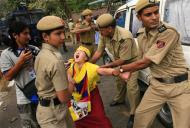
Protests led by Buddhist monks against Chinese rule in Tibet turned violent Friday, with shops and vehicles torched and gunshots echoing through the streets of the ancient capital, Lhasa. (March 14)
With tension rising in Tibet following a series of anti-China protests, the BBC spoke to an eyewitness who saw police on Wednesday beating monks at one of three monasteries which have been sealed. He wishes to be identified only as John.
We knew something was happening because there were more road checks as we got into Lhasa. Cars were being stopped and police were writing the licence plates down. We tried to stop at a shrine outside Lhasa but were told to keep moving. Then we heard around Wednesday lunchtime that Drepung monastery was closed. We didn't know why. That afternoon we went to Sera monastery to see the debating. It's famous - the monks debate points of philosophy and people come to see it. Just when it was about to start, around three o'clock, we started to hear rounds of applause coming out of a courtyard in the heart of the temple. We thought the debate was starting but then suddenly the clapping reached a crescendo - kind of a hooting. Then the gate of the debating compound opened and this stream of maroon humanity poured out, several hundred monks. It was impossible to count but I think there were at least 300. We thought it was part of the tradition but when you looked at the expression on their faces, it was a very serious business. They were pumping their hands in the air as they ran out of the temple.
Plain-clothes police
The minute that happened we saw the police - two or three who were inside the compound - suddenly speaking into their radios. They started going after the monks, and plain-clothes police - I don't know this for sure but that's what I think they were - started to emerged from nowhere. There were four or five in uniform but another 10 or 15 in regular clothing. They were grabbing monks, kicking and beating them. One monk was kicked in the stomach right in front of us and then beaten on the ground. The monks were not attacking the soldiers, there was no melee. They were heading out in a stream, it was a very clear path, and the police were attacking them at the sides. It was gratuitous violence. The Tibetan lay-people started rushing to get out of the temple. Tibetan grandmothers were grabbing young kids and getting them out. We were left behind when the monks left the temple. About 20 minutes later we felt as if we could leave. Continue reading
Picture and News Report by BBC
More Latest Updates:
AFP - The Dalai Lama said Friday he was "deeply concerned" over the situation in Tibet and appealed to China to "stop using force" after security forces used gunfire to quell the biggest protests against Chinese rule in two decades.
BEIJING (AP) — Chinese police used tear gas to disperse hundreds of Buddhist monks who held a second day of rare protests near Tibet's capital, U.S. government-funded Radio Free Asia reported Wednesday. Security personnel surrounded about 500 monks Tuesday as they marched near a police station in Lhasa, a witness told the radio station's Tibetan service. "There were probably a couple of thousand armed police ... wearing different uniforms. Police fired tear gas into the crowd," the unidentified witness said. The demonstrators, on their way to demand the release of other monks detained in protests Monday, shouted "We want an independent Tibet" and "Free our people or we won't go back," other unidentified witnesses said. The report could not immediately be independently confirmed. A woman who answered the phone at the public security bureau in Lhasa denied knowledge of the incident. At the local government office, a man who identified himself as Bianba said he was aware of an incident but gave no details. On Monday, the anniversary of a failed 1959 uprising against China's 57-year rule over Tibet, several hundred Buddhist monks staged two major protests in Lhasa in a bold, public challenge to Beijing's authority. Monks shouted "Free Tibet" as they marched until police dragged them apart and arrested some, an eyewitness told the advocacy group, Free Tibet Campaign. RFA also reported that gunshots were heard overnight from the direction of a Lhasa monastery, which had been blocked off by police. Tibet's regional government head, Champa Phuntsok, said authorities briefly detained some monks and released them after they were questioned and "counseled." Foreign Ministry spokesman Qin Gang told a news conference that "some ignorant monks in Lhasa, abetted by a small handful of people, did some illegal things that can challenge the social stability." Meanwhile, several hundred Tibetan exiles defied police orders and resumed a march to Tibet from the north Indian town of Dharmsala, where their spiritual leader the Dalai Lama presides over a Tibetan government-in-exile. The march was to protest the Beijing Olympics. Indian police said it violated an agreement between New Delhi and the government-in-exile. Neither the exile government nor the Dalai Lama has authorized the march.
Once upon a time there lived a father and a son. Both were very gifted, both witty, particularly the father... On one rare occasion, when the father looking upon his son saw that he was deeply troubled, he stood before him and said: poor child, you go about in silent despair. (But he never questioned more closely, alas he could not, for he himself was in silent despair.) Otherwise, they never exchanged a word on the subject. Both father and son were, perhaps two of the most melancholy men in the history of man.
And the father believed that he was the cause of the son's melancholy, and the son believed that he was the cause of the father's melancholy, and so they never discussed it... And what is the meaning of this? The point precisely is that he made me unhappy - but out of love. His error did not consist in lack of love but in mistaking a child for an old man.
Being happy also means being peaceful, but quite often people don't really want to direct their attention to that. There is the connotation of "not interesting" about it, or "not enough happening." Obviously there would be no proliferations (papañca) or excitement. Peace is thought of as an absolute in this world, from a political, social and personal angle.
Yet peace is very hard to find anywhere. One of the reasons must be, not only that it's difficult to attain, but also that very few people work for such an achievement. It seems as if it were a negation of life, of one's own supremacy. Only those who practice a spiritual discipline would care to direct their minds towards peace.
A natural tendency is to cultivate one's own superiority which also often falls into the other extreme, one's own inferiority. When one has one's own superiority in mind, it's impossible to find peace. The only thing that one can find is a power game, "Anything you can do, I can do better." Or, at times, when it's quite obvious that this isn't so then "anything you can do I can't do as well." There are moments of truth in everyone's life, when one sees quite clearly that one can't do everything as well as the next person, whether it's sweeping a path or writing a book.
This kind of stance, which is very common, is the opposite of peacefulness. A display of either one's own abilities or the lack of them, will produce restlessness rather than peace. There's always the reaching out, the craving for a result in the form of other people's admittance of one's own superiority or their denial of it. When they deny it, there is warfare. When they admit it, there is victory.
Victory over other people has as its underlying cause a battle. In war there is never a winner, there are only losers. No matter who signs the peace-treaty first, both sides lose. The same applies to this kind of attitude. There are only losers, even though one may have a momentary victory, having been accepted as the one who knows better, or is stronger or cleverer. Battle and peace do not go well together.
One wonders in the end, does anybody really want peace? Nobody seems to have it. Is anybody really trying to get it? One does get in life what one strongly determines. It is important to inquire into our innermost heart whether peace is really what we want. The inquiry into one's heart is a difficult thing to do. Most people have a steel door of thick dimensions which is covering the opening of their heart. They can't get in to find out what's going on inside. But everyone needs to try to get in as far as possible and check one's priorities.
In moments of turmoil, when one is either not getting the supremacy one wants or one feels really inferior, then all one desires is peace. Let it all subside again and neither the superiority nor the inferiority is very distinct, then what happens? Is it really peace one wants? Or does one want to be somebody special, somebody important or lovable?
- Ayya Khema Sister Khema was born in Germany, educated in Scotland and China, and later became a United States citizen. She now lives at Wat Buddha Dhamma Forest Monastery near Sydney Australia, which was established in 1978 on land purchased and donated by her. In 1979 she ordained as a Nun in Sri Lanka, and in 1982 she established the International Buddhist Women's Centre near Colombo. She spends most of her time teaching meditation course in different parts of the world. Rains Retreat is spent in Sri Lanka.
Though our friendship had been short, i will never forget your kindness and your generosity.. You have lived your life with so much gusto and you showed us true courage, right to the very end. I have nothing but admiration for you. Though we will soon bid our final farewell, we will always remember you, and you will always have a special place in our hearts. This one is for you, my friend:
"This quiet time of day my stilled vision sends soundless chants to the Sacred, in whose luminousness the original one saw the form of the gods. If the sounds of the oldest mantras were in my voice, my hymns would vanish in this translucent light, light. No words. No words. I see into the distance where edges dissolve my silence as a canopy in the white blueness of noon sky."
Samsara literally means "wandering-on." Many people think of it as the Buddhist name for the place where we currently live — the place we leave when we go to nibbana. But in the early Buddhist texts, it's the answer, not to the question, "Where are we?" but to the question, "What are we doing?" Instead of a place, it's a process: the tendency to keep creating worlds and then moving into them. As one world falls apart, you create another one and go there. At the same time, you bump into other people who are creating their own worlds, too.
In addition to creating suffering for ourselves, the worlds we create feed off the worlds of others, just as theirs feed off ours. In some cases the feeding may be mutually enjoyable and beneficial, but even then the arrangement has to come to an end. More typically, it causes harm to at least one side of the relationship, often to both. When you think of all the suffering that goes into keeping just one person clothed, fed, sheltered, and healthy — the suffering both for those who have to pay for these requisites, as well as those who have to labor or die in their production — you see how exploitative even the most rudimentary process of world-building can be.
This is why the Buddha tried to find the way to stop samsara-ing. Once he had found it, he encouraged others to follow it, too. Because samsara-ing is something that each of us does, each of us has to stop it him or her self alone. If samsara were a place, it might seem selfish for one person to look for an escape, leaving others behind. But when you realize that it's a process, there's nothing selfish about stopping it at all. It's like giving up an addiction or an abusive habit. When you learn the skills needed to stop creating your own worlds of suffering, you can share those skills with others so that they can stop creating theirs. At the same time, you'll never have to feed off the worlds of others, so to that extent you're lightening their load as well.